Omakase (おまかせ) is a style of dining in Japanese restaurants where the guest leaves the meal entirely in the hands of the chef. Directly translated from Japanese, it means “respectfully, I leave it up to you.” It is an expression of trust — and the foundation of a truly personal dining experience.
At Miyu, omakase is at the heart of everything we do. Our Executive Chef Ng Kam Kwan curates each menu around the finest seasonal produce air-flown from Toyosu Market in Japan. As a result, every visit is a unique journey through the Japanese culinary calendar.
What Does Omakase Mean?
In Japanese, the word omakase comes from the verb makaseru (任せる), meaning “to entrust” or “to leave to someone.” When a diner says “omakase”, they are telling the chef: I trust your judgement — serve me what is best today.
This trust is not taken lightly. In return, the chef reserves his finest ingredients and most thoughtful preparations for the omakase sitting. It is, therefore, the highest expression of the chef-diner relationship in Japanese dining.
What to Expect During an Omakase Meal
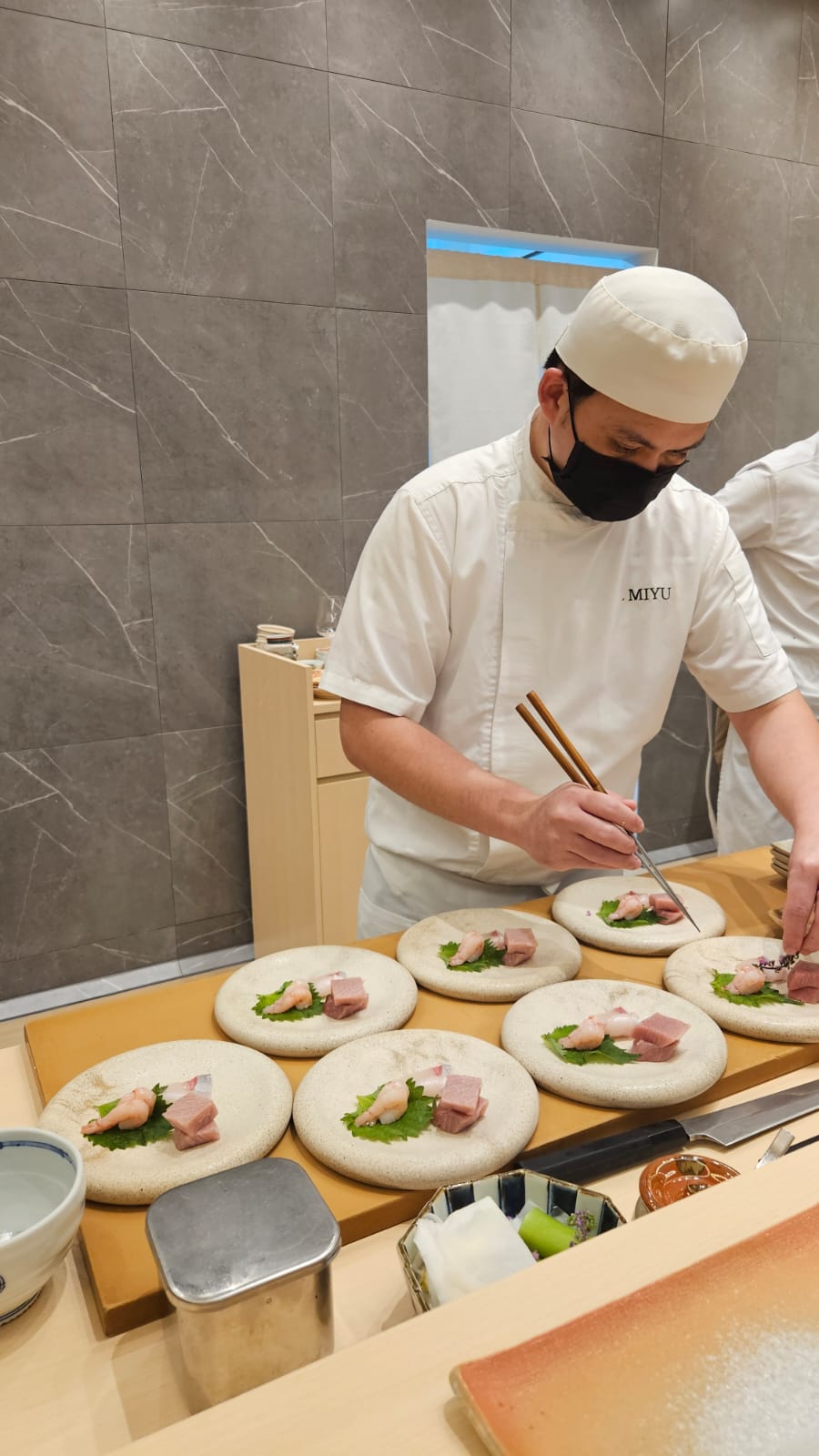
An omakase meal typically begins with lighter courses and progresses toward richer, more substantial dishes. For example, at Miyu, a dinner omakase might begin with a seasonal appetiser, followed by sashimi, then warm courses, then nigiri, and finally a hand roll and dessert.
The chef determines the sequence based on ingredients available that day. There is no à la carte selection. Instead, the diner surrenders choice in exchange for the chef’s full creative attention.
Additionally, most omakase counters seat a small number of guests — typically 8 to 12. This allows the chef to maintain direct communication with diners throughout the meal.
Omakase Dining Etiquette
Omakase dining has its own set of customs. First, inform the restaurant of any dietary restrictions at the time of booking — not on the day of dining. This gives the chef time to plan around your needs.
Second, avoid strong perfumes or colognes. These can interfere with the subtle aromas of the food. Third, it is generally expected that you arrive on time. Omakase counters often run to a specific schedule and late arrivals disrupt the pacing.
Moreover, it is considerate to eat each piece of nigiri promptly after it is served. Nigiri is crafted to be eaten at the exact moment it is placed in front of you.
How Much Does Omakase Cost in Singapore?
Omakase pricing in Singapore varies widely. However, as a guide, expect the following ranges at Miyu:
- Lunch omakase: from $128 per person — a focused, seasonal menu ideal for business or leisure
- Dinner omakase: from $228 per person — the full Edomae experience with Chef Ng Kam Kwan’s seasonal repertoire
All prices are subject to 10% service charge and prevailing GST. Seasonal premium ingredients such as A4/A5 wagyu are, furthermore, available as additional à la carte additions on request.
What is Edomae Omakase?
Edomae (江戸前) refers to the traditional Tokyo-style of sushi-making that developed during the Edo period along Tokyo Bay. The word literally means “in front of Edo” — Edo being the historical name for Tokyo.
Edomae omakase is defined by mastery of technique over spectacle. Key elements include the careful seasoning of shari (sushi rice) and the deliberate ageing and curing of fish to deepen flavour. Additionally, a precise sequencing of courses from light to rich is central to the tradition.
At Miyu, Chef Ng Kam Kwan practises this tradition with seasonal ingredients sourced directly from Toyosu Market. His preparation of anago, kohada, and aged tuna reflects years of study in this exacting craft.
What Seasonal Ingredients Are Served at Miyu?
One of the most distinctive aspects of omakase dining is how menus change with the seasons. At Miyu, ingredients are air-flown from Japan weekly. Therefore, the menu reflects what is at peak quality at Toyosu Market that week.
For example, spring brings sakura masu and hotaru ika. Summer, in contrast, brings aji, ayu, and Hokkaido uni. Autumn features rich sanma and matsutake mushroom. Winter, meanwhile, brings the celebrated fugu and buri.
Each season has its own character. Moreover, no two visits to Miyu are ever the same — which is precisely the point of omakase. Read our July 2026 seasonal ingredients guide to see what’s currently at the Miyu counter, or explore our August 2026 guide for what’s coming next.
Experience Omakase at Miyu, Dempsey Hill
Miyu is located at 13A Dempsey Road, Singapore 247694 — a short ten-minute drive from Orchard Road and the CBD. We are open daily for lunch and dinner.
Frequently Asked Questions About Omakase
In à la carte dining, guests choose each dish from a menu. In omakase, there is no menu — the chef selects and prepares every course based on the finest seasonal ingredients available that day. The guest surrenders choice in exchange for the chef’s full creative attention.
An omakase dinner typically takes 1.5 to 2.5 hours. At Miyu, dinner runs 6.30pm–10.30pm (last order 8.30pm) and lunch runs 12pm–3pm (last order 1.30pm). Lunch omakase typically takes 1 to 1.5 hours.
Yes — always inform the restaurant at the time of booking, not on the day. This gives the chef time to plan alternatives. At Miyu, we offer a cooked-food omakase option (AKA at lunch, AKAIBARA at dinner) for guests who prefer not to eat raw seafood.
Omakase Singapore prices range from under $100 at casual counters to over $500 at ultra-premium restaurants. At Miyu, lunch omakase starts from $128 and dinner omakase from $228 per person. All prices are subject to 10% service charge and prevailing GST.
Edomae (江戸前) refers to the traditional Tokyo style of sushi-making developed during the Edo period along Tokyo Bay. It is defined by mastery of technique: careful seasoning of shari (sushi rice), deliberate ageing of fish to develop umami, and a considered progression of courses from light to rich. At Miyu, Executive Chef Ng Kam Kwan practises this tradition with seasonal ingredients sourced weekly from Toyosu Market, Japan.
Japanese cuisine encompasses far more than omakase — from the beloved everyday tradition of donburi rice bowls to the precision of the Edomae counter. Our comprehensive guide to donburi covers kaisendon, unadon, and the premium ingredient tradition that connects Japanese rice bowl culture to omakase dining.
To explore what’s currently on the menu, see our lunch omakase menu from $128 and our dinner omakase menu from $228. To reserve your omakase experience, visit our reservations page or WhatsApp us at +65 8208 3168. We look forward to welcoming you to the counter.